
Surfaces That Define Outdoor Function
Paver and Natural Stone Installation in Chandler for properties requiring durable outdoor surfaces that integrate with landscape features and withstand Arizona weather
Pavers and natural stone form the foundation of outdoor living spaces by creating level surfaces for furniture, defining circulation routes between functional areas, and establishing borders that separate hardscape from turf or planted zones. Installation precision determines whether a patio remains flat or develops low spots where water pools, whether pathway edges stay aligned or shift out of position during monsoon rains, and whether material transitions appear clean or leave irregular gaps that collect debris. WHAT Luxury Landscapes LLC installs pavers and natural stone in Chandler by preparing compacted base layers, setting edge restraint that resists ground movement, and placing materials in patterns that accommodate future feature additions like fire pits, lighting, or grill islands without requiring demolition and rework.
Material choice affects installation method because flagstone laid in irregular patterns demands different joint widths and base preparation than concrete pavers arranged in running bond or herringbone layouts. Pattern complexity influences labor time since designs with curves, borders, or multiple colors require more cutting and fitting than simple grid arrangements.
Schedule a site evaluation to review material options and discuss layout plans based on your property dimensions.
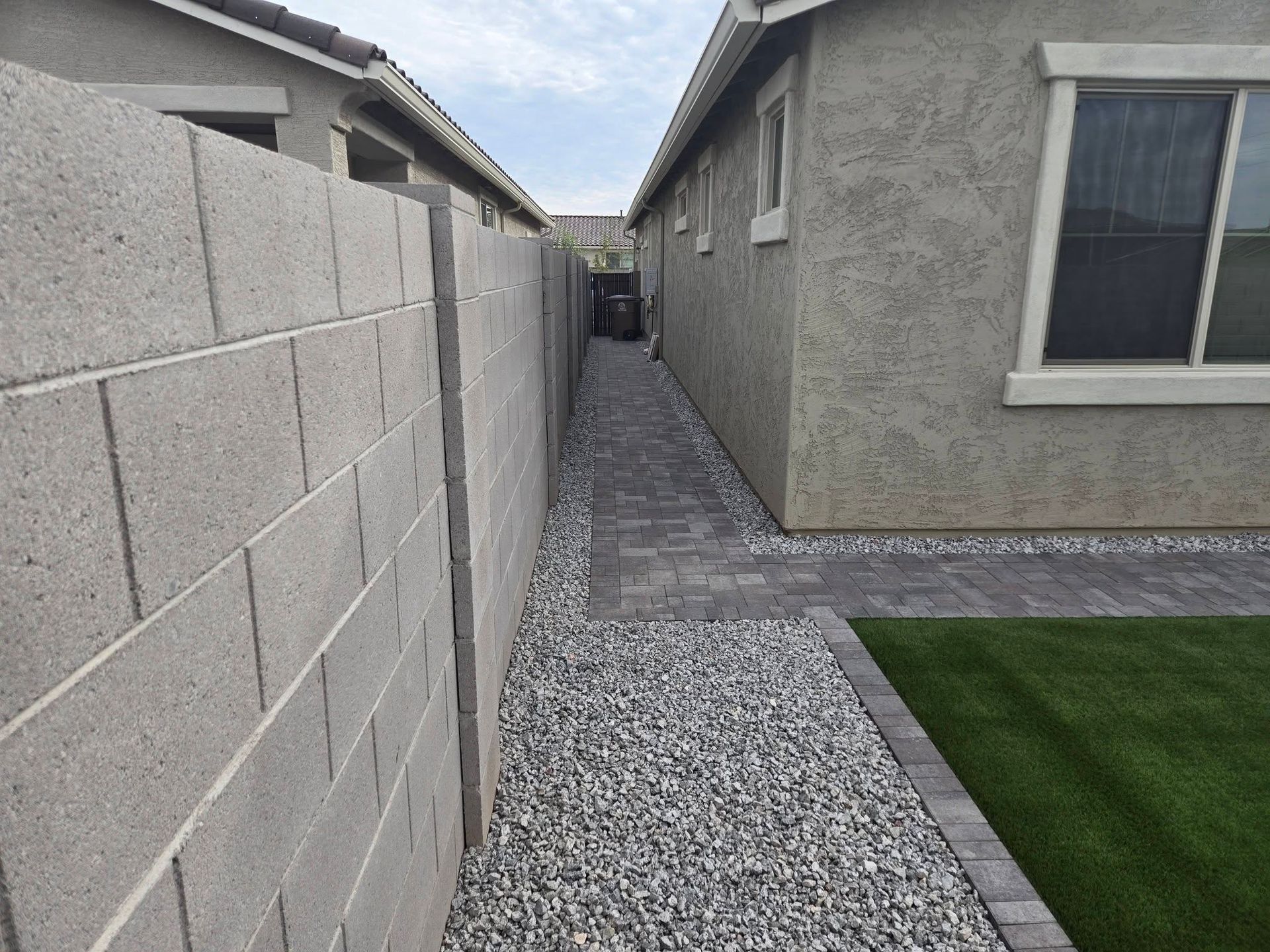
What Proper Installation Requires
Base preparation begins with excavation to stable soil depth, aggregate placement in compacted lifts, and grade adjustments that direct water away from structures at a minimum two-percent slope. Edge restraint installs before surface materials to lock perimeter units in place and prevent边缘 spreading that creates gaps or misalignment over time. Joint spacing follows manufacturer specifications for each material type, and polymeric sand fills those gaps to harden after water activation, preventing weed growth and insect tunneling while allowing minor material movement during thermal expansion.
Once installation finishes, you'll walk on surfaces that feel solid without wobbling or rocking underfoot, and furniture legs will rest level rather than tipping on uneven joints. Water will sheet off the patio toward drainage areas instead of pooling in depressions, and borders between pavers and adjacent turf or gravel will appear as straight lines without waves or gaps. Material patterns will align across the installation area without abrupt shifts, and feature tie-ins for lighting or firepits will integrate seamlessly instead of appearing as patched additions.
Installation includes excavation, base preparation, edge restraint, material placement, joint filling, and cleanup, but does not include electrical trenching for lighting or plumbing for water features unless specified in the project scope. Soil conditions affect base depth requirements because expansive clay demands thicker aggregate layers than stable decomposed granite, and some natural stone types require sealing to prevent staining from organic matter or hard water deposits.
Questions Before Starting Your Project
Property owners planning paver or stone installations often ask about material differences, preparation details, and how these surfaces coordinate with other outdoor elements.
What's the difference between pavers and natural stone?
Pavers are manufactured to uniform dimensions for tight joints and predictable patterns, while natural stone varies in size and thickness, requiring custom fitting and wider joints that create a more organic appearance.
How deep does base preparation need to go?
Excavation depth depends on soil stability and intended use, but most Chandler installations require six to eight inches of compacted aggregate to support pedestrian traffic and resist settling during ground moisture changes.
What affects how long surfaces stay level?
Base compaction density, edge restraint quality, and proper drainage slope determine whether materials remain stable or shift when monsoon rains saturate the ground or tree roots grow beneath the installation.
When should paver or stone installation happen relative to turf or planting?
Hardscape typically installs first because heavy equipment and material staging can damage existing landscape elements, and final elevations establish borders for turf seams and planting bed edges.
What does the two-year workmanship warranty cover?
The warranty addresses settling, joint separation, or edge displacement caused by installation defects, but does not cover material staining, surface wear from use, or damage from subsequent work by other contractors.
WHAT Luxury Landscapes LLC completes paver and natural stone installations with crews that maintain consistent quality from excavation through final cleanup, and every project backs up with a two-year workmanship warranty. Request a free estimate to discuss your material preferences and layout goals.