
Finished Yards That Use Water Deliberately
Drought-Tolerant Landscaping in Chandler for properties that need curb appeal and reduced water demand without creating sparse or neglected-looking yards
Arizona landscapes fail when homeowners attempt to maintain Kentucky bluegrass lawns that demand daily watering through 110-degree afternoons, or when desert yards default to bare gravel with a single cactus that reads as unfinished rather than intentional. Drought-tolerant landscaping planned by WHAT Luxury Landscapes LLC in Chandler selects plants and materials suited to low rainfall and high evaporation rates while arranging textures, colors, and heights that create visual interest and defined spaces. The approach reduces dependence on traditional turf by incorporating hardscape gathering areas, decomposed granite pathways, and plant clusters that establish with deep roots rather than shallow irrigation that promotes surface evaporation.
Plant selection emphasizes native and adapted species that survive on seasonal rainfall after establishment, grouped by water needs so high-use zones near entries or patios receive focused irrigation while outlying areas function with minimal supplemental water. Hardscape integration defines borders, directs drainage, and separates planted beds from turf or gravel zones so each area receives appropriate maintenance without overspray or runoff waste.
Request a free estimate to discuss water-conscious layout options tailored to your property and visual preferences.
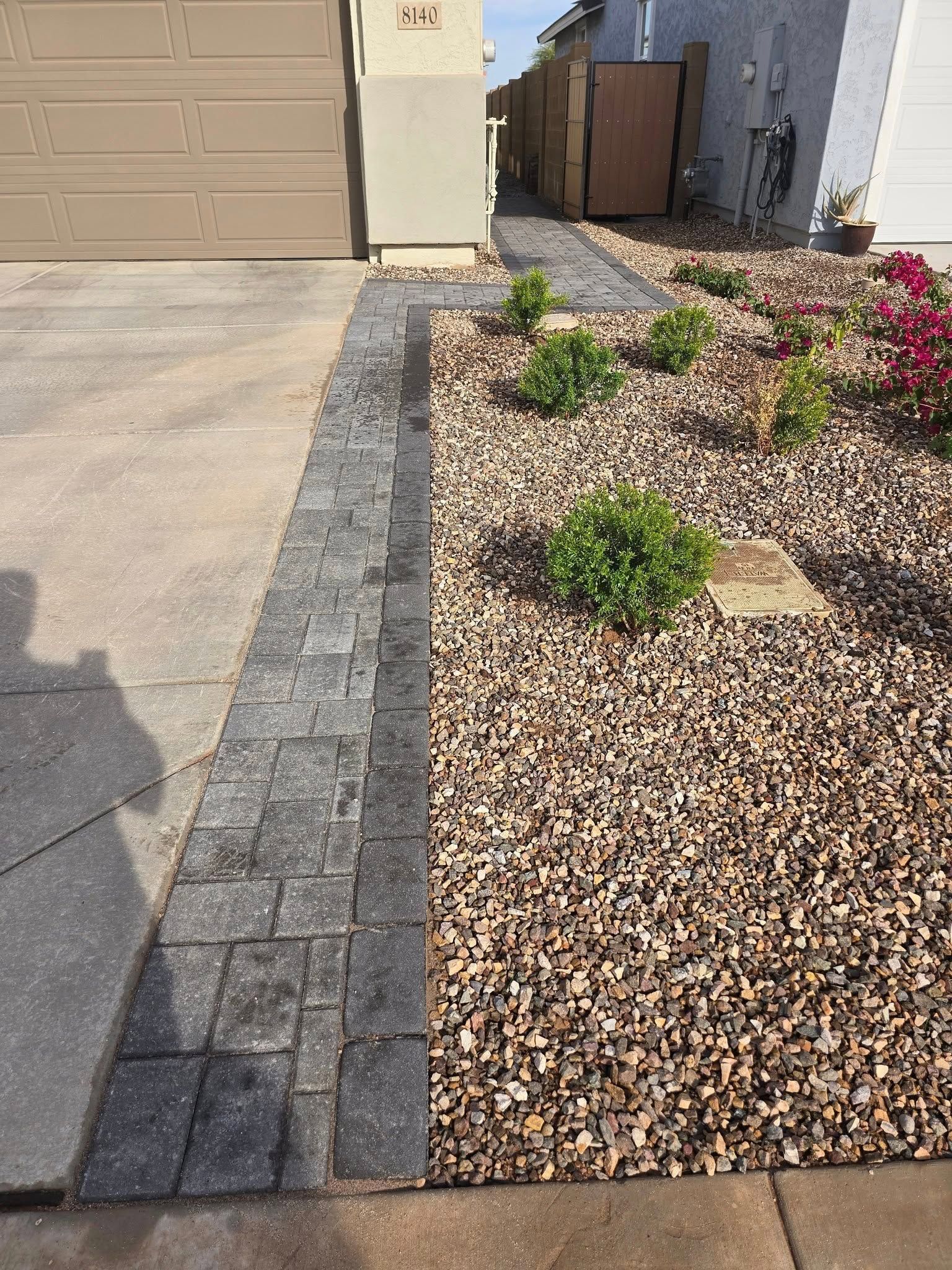
What Water-Conscious Design Actually Delivers
Layouts balance open hardscape spaces with planted beds that provide shade, soften building walls, and introduce seasonal color through bloom cycles rather than relying on continuous green turf. Material choices include decomposed granite that allows water infiltration, permeable pavers that reduce runoff, and mulch layers that slow evaporation from root zones. Irrigation zones separate high-visibility areas that justify weekly watering from background plantings that thrive on monthly deep soaking, and drip systems deliver water directly to root zones instead of spraying it into the air where desert wind accelerates loss.
After installation, you'll notice defined planting beds that appear intentional rather than random, pathways that stay walkable without puddles or washouts during monsoon storms, and plant selections that maintain structure through summer heat instead of wilting or browning by mid-season. Water bills decrease because irrigation runs less frequently and targets only the zones that require it, while curb appeal improves through layered textures and year-round visual interest rather than the monotone green of thirsty turf.
Projects include plant selection, hardscape coordination, irrigation zone planning, and material placement, but do not include removal of existing irrigation systems or tree trimming for specimens over fifteen feet. Plant establishment requires initial watering to develop root systems, and some species take two growing seasons to reach drought-independent maturity depending on soil conditions and installation timing.
Answers to Frequent Service Questions
Chandler residents exploring water-conscious landscapes often need guidance on balancing aesthetics with practicality and understanding what low-water approaches realistically require.
What does drought-tolerant actually mean for maintenance?
Plants still need occasional watering during establishment and extreme heat, but mature specimens survive on rainfall patterns typical to the region rather than requiring daily irrigation to stay alive.
How does this approach avoid looking sparse or unfinished?
Layered planting with varied heights, textures, and hardscape definition creates visual structure and intentional design rather than empty space punctuated by isolated plants.
What plants work well in Chandler's climate?
Desert-adapted species like Red Yucca, Texas Sage, and Desert Marigold establish quickly, tolerate alkaline soil, and provide color or texture through extreme summer heat and occasional winter freezes.
When should drought-tolerant landscaping be installed?
Fall or early spring planting allows root development during moderate temperatures before summer stress, which reduces supplemental watering needs and improves long-term plant survival.
How does hardscape integration support water conservation?
Patios, paths, and gathering areas reduce planted square footage that demands irrigation, and proper grading directs runoff toward planting beds instead of letting it sheet into streets or drainage channels.
WHAT Luxury Landscapes LLC plans and installs drought-tolerant landscapes that balance water efficiency with deliberate design and finished appearance. Reach out for a free estimate to review your property and discuss plant and material options.